


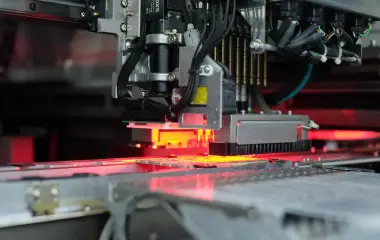
How Pick and Place Machines Work in PCB Assembly
The world of electronics manufacturing is intricate and continuously evolving, with demand for efficiency and precision at an all-time high. At the heart of PCB (Printed Circuit Board) assembly lies the pick and place machine, a crucial piece of equipment that significantly enhances the manufacturing process. This article explores how pick and place machines work, their components, and the benefits they bring to PCB assembly.
Understanding PCB Assembly
PCB assembly is the process of connecting electronic components to a printed circuit board. This process involves several steps, including:
- Designing the PCB: Creating the layout using CAD software.
- Sourcing Components: Selecting and procuring electronic components.
- Manufacturing the PCB: Fabricating the board based on the design.
- Assembly: Attaching components to the PCB, which is where pick and place machines come into play.
- Testing: Ensuring functionality through various testing methods.
What is a Pick and Place Machine?
A pick and place machine is an automated device used in the assembly of PCBs. It is designed to pick up electronic components from a feeder and place them accurately on the PCB. This automation reduces human error, increases speed, and enhances overall production efficiency.
How Do Pick and Place Machines Work?
1. Component Feeding
Pick and place machines utilize various feeders to supply components. These feeders can be:
- Tape and Reel: Components are mounted on a tape and rolled into the machine.
- Trays: Used for larger components, where the machine picks components one by one.
- Bulk Feeders: Suitable for smaller parts, where components are fed into a bowl that orients them for easy access.
2. Vision Systems
Most modern pick and place machines are equipped with advanced vision systems. These systems ensure that the correct component is picked and placed accurately. They consist of:
- Camera Systems: Capture images of components and the PCB to verify placement accuracy.
- Image Processing Software: Analyzes the images to detect any discrepancies and guide the machine’s movements.
3. Picking Mechanism
The picking mechanism is responsible for grasping the component. This can be achieved using:
- Vacuum Grippers: Utilize suction to pick up components.
- Mechanical Grippers: Use pincers to grasp components securely.
4. Placement Process
Once a component is picked, it is transported to the PCB. The machine uses precise positioning systems, often involving:
- Linear Motors: Provide fast and accurate movement.
- Rotary Tables: Allow for quick orientation adjustments.
The machine places the component onto the PCB at the designated location, often with a high level of precision measured in micrometers.
5. Soldering
After components are placed, the PCB typically undergoes soldering, which can be done using different methods such as:
- Reflow Soldering: Used for surface-mounted components.
- Wave Soldering: Suitable for through-hole components.
Benefits of Using Pick and Place Machines
Integrating pick and place machines into PCB assembly processes offers numerous advantages:
- Increased Speed: Automated processes significantly reduce assembly time.
- Enhanced Accuracy: Minimizes human error and ensures components are placed correctly.
- Cost-Effectiveness: Lower labor costs and reduced waste contribute to overall savings.
- Scalability: Easily adapt to various production volumes and component types.
Choosing the Right Pick and Place Machine
When selecting a pick and place machine, consider the following factors:
- Production Volume: Higher volumes may require faster machines.
- Component Types: Different machines handle various sizes and types of components.
- Budget: Assessing the total cost of ownership, including maintenance and parts.
- Software Compatibility: Ensure the machine’s software integrates with existing systems.
Future of Pick and Place Technology
The evolution of pick and place technology is ongoing, with trends focusing on:
- AI and Machine Learning: Enhancing the efficiency of vision systems and predictive maintenance.
- Increased Automation: Streamlining the entire assembly process, including inventory management.
- Advanced Materials: Developing machines capable of handling new and innovative components.
Conclusion
Pick and place machines play a pivotal role in the PCB assembly process, enabling manufacturers to produce high-quality products efficiently. By understanding the workings of these machines and their benefits, businesses can make informed decisions that enhance productivity and reduce costs. As technology continues to advance, embracing these innovations will be key to staying competitive in the ever-evolving electronics market.